The first sign is often the noise before sunrise: scratching, fluttering and chicks calling from somewhere above the ceiling. Bird proofing solar panels stops birds treating the gap beneath your array as a sheltered unit for nesting, roosting and dropping rubbish. Left alone, that small gap can become a messy roof problem that affects your panels, gutters and home.
Pigeons are the usual culprit across South East Queensland, although other birds may investigate a protected roof space. The panels create shade from the harsh afternoon sun and cover from rain. Add a ledge for landing and a quiet roofline, and something has moved in that is not paying rent.
Why birds under solar panels become a bigger problem
A few birds on the roof are not automatically a crisis. The trouble starts when they repeatedly access the underside of the panels. Nesting material, feathers and droppings build up in an area that is awkward to see and harder to clean properly.
That material can restrict drainage paths, collect against roof sheets and find its way into gutters. Droppings can stain panels and roof surfaces, while persistent bird activity creates noise that is especially unwelcome in bedrooms and upper-storey rooms. On some properties, debris around cabling and panel components also warrants prompt inspection.
There is a practical performance issue too. Panels need clear exposure to produce as intended. Heavy droppings and accumulated debris on the panel surface can reduce output. While bird-proofing is not a substitute for solar maintenance, it removes the protected nesting space that keeps creating the mess.
For landlords, body corporates and facilities managers, delay often turns a small maintenance request into a recurring complaint. Residents hear the activity, cleaners cannot reach the source, and the same birds return after a basic tidy-up. The fix needs to address access, not just the visible droppings.
What bird proofing solar panels involves
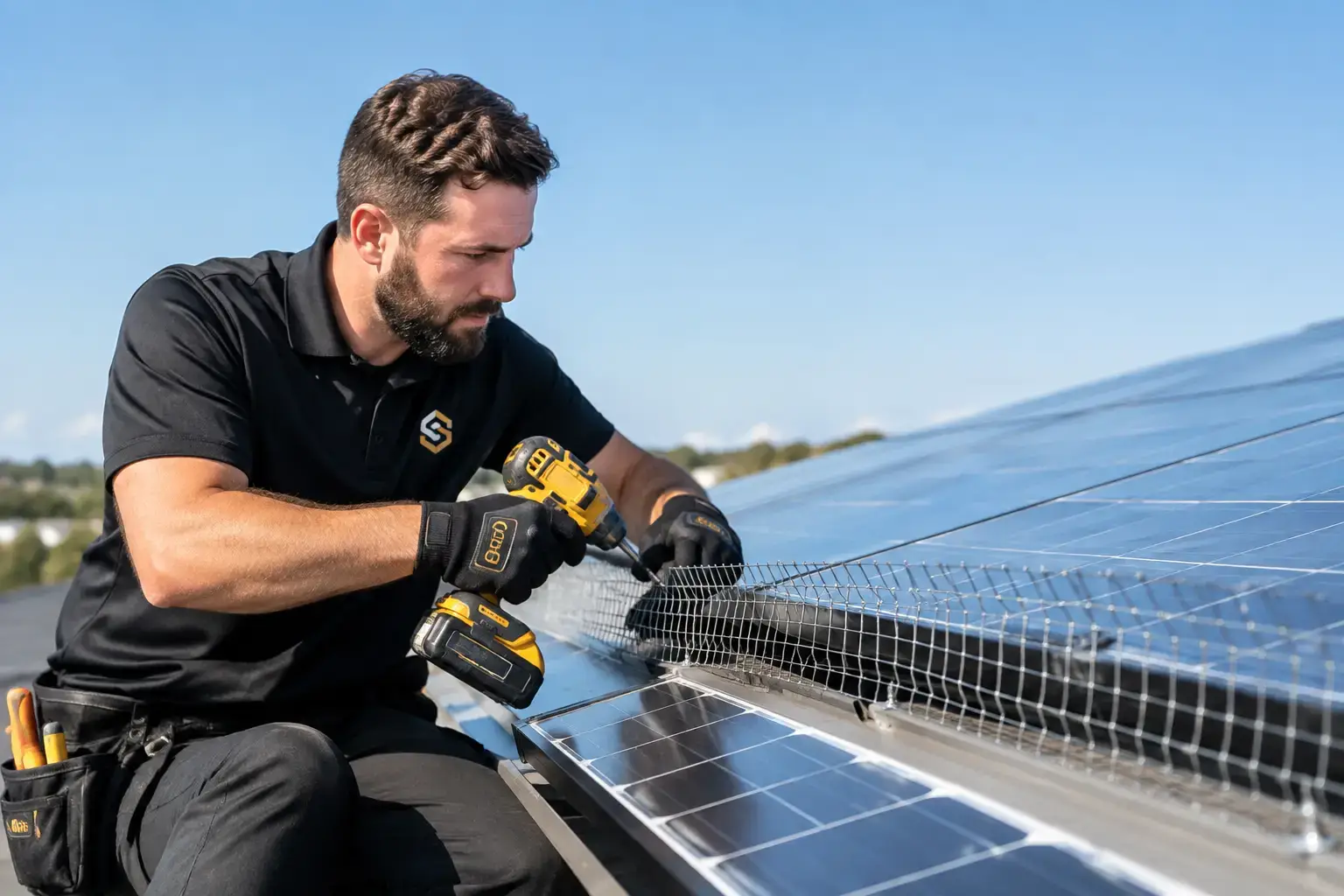
Effective bird proofing uses a physical exclusion system fitted around the perimeter of the solar array. Mesh is secured to close the gap between the panels and roof while allowing the system to remain ventilated and accessible for appropriate solar servicing.
The objective is straightforward: birds can no longer get underneath the panels, so they cannot establish a nesting area there. It is a source-focused solution, not a temporary scare tactic.
A proper installation should be tailored to the panel layout, roof profile and access points. Different arrays have different edge gaps, brackets, roof pitches and nearby routes birds use to land. A tidy installation follows the array rather than looking like an afterthought strapped to the roof.
Just as importantly, the work should avoid interfering with the panels, roof sheeting, electrical cabling or drainage. That is why a close look at the site matters before mesh goes up.
Mesh is not the whole job
Fitting exclusion mesh over an occupied nesting area can trap debris and leave the underlying problem unresolved. The area beneath the panels should first be assessed for nesting activity, accumulated material and signs of damage or water flow issues.
If an active nest, eggs or young birds are present, the timing and approach need care. Local wildlife requirements can apply, and the right response depends on the bird species and stage of nesting. Rushing to block the opening is not good property management.
Once the space is clear to treat, loose nesting material and accessible debris can be removed before the exclusion barrier is installed. The result is a clean break from the cycle of birds entering, nesting and fouling the same protected space.
Signs your solar panels need bird proofing
You do not need to climb onto the roof to spot the warning signs. Watch and listen from ground level, particularly in the early morning and late afternoon when birds are active around a roost.
Common indicators include repeated bird traffic to one edge of the array, cooing or scratching in the roof cavity, feathers blowing from beneath panels, droppings on the roof or ground below, and twigs appearing in gutters. You may also notice flies around waste material or a smell near upper windows and eaves.
Solar monitoring data can provide another clue, but it should not be used to diagnose a bird problem on its own. Lower output can have several causes, including dirt on the panels, shade, weather, equipment issues or a system fault. A visual inspection of the array and roofline gives the clearer picture.
Why DIY bird deterrents often fall short
It is tempting to place a plastic owl, reflective tape or sound device near the roof. These can occasionally shift bird behaviour for a short period, but nesting birds usually adapt when the sheltered space remains available. The attraction is the gap under the panels, not just the roof itself.
Expanding foam, improvised wire and loosely fitted mesh bring different problems. They can look untidy, deteriorate in Queensland weather, obstruct drainage or create sharp edges. Poorly attached material may also lift in wind and cause further roof damage.
Roof access is another reason to think twice. Solar arrays combine height, sloped surfaces and electrical infrastructure. A job that appears simple from the driveway can be difficult to complete cleanly without the right access plan and equipment.
The practical process: inspect, clear, exclude, follow up
Bird proofing works best as an organised process rather than a quick fit-and-forget visit.
1. Inspect the array and roofline
The inspection identifies which panels birds are using, how they are entering, whether nesting is active and where debris has gathered. It also checks the surrounding roof area, gutters and obvious points of concern. For strata and commercial sites, this creates a clear record of what was found and the recommended work.
2. Clear the nesting material where appropriate
Before exclusion can work, the space beneath the array needs to be dealt with appropriately. This step depends on bird activity and site conditions. It may include removing accessible debris and checking whether the build-up has affected drainage or nearby roof areas.
3. Install a fitted physical barrier
The barrier is shaped and secured around the outside of the array to deny future access beneath the panels. Good workmanship matters here. The mesh should sit neatly, cover likely entry points and respect the requirements of the solar installation and roof.
4. Check the result and keep records
A post-service check confirms the exclusion is properly fitted and the access routes have been closed. Written reporting is useful for homeowners who want clarity, and particularly valuable for property managers who need a record for owners, tenants or maintenance files.
When one array is not the only bird problem
Birds under panels often signal wider roofline activity. Pigeons may also roost on eaves, air-conditioning units, ledges, balcony balustrades or loading-dock canopies. Treating only the panels may be enough when that is clearly the nesting site, but some properties need a broader bird-control plan.
This is common in unit complexes, retail sites and industrial buildings where birds move between several sheltered areas. A site-by-site assessment helps separate the urgent exclusion work from optional maintenance planning. There is no value in installing a barrier on one array while ignoring the nearby ledge that keeps feeding the same bird traffic into the building.
Questions property owners often ask
Will bird proofing damage my solar panels?
A professionally planned exclusion system is designed to work around the panel array rather than alter it. The installer should account for panel edges, mounting hardware, roof materials and access requirements before fitting the mesh.
Do panels need to be cleaned first?
It depends on the condition of the array. If droppings are visible on the panel faces, cleaning may be worthwhile as part of restoring the area. Bird proofing prevents future access underneath, but it does not remove existing grime from the top surface.
How quickly should I act?
Act sooner if you can hear birds in the roof cavity, see nesting material in gutters, notice heavy droppings, or have repeated tenant complaints. Early action is usually simpler because less debris has accumulated beneath the array.
Can this be managed across multiple properties?
Yes. For body corporates, landlords and commercial operators, documenting each site, its bird activity and the work completed makes planned maintenance easier to manage. It also gives stakeholders a straightforward record instead of a string of vague maintenance notes.
Bird activity beneath solar panels rarely improves by waiting it out. A clear inspection and fitted exclusion barrier turn an awkward, noisy roof problem into a manageable maintenance job. Syndicate Pest Solutions takes the practical approach: find the entry point, deal with the nesting area properly and close it off so your roof can get back to doing its job.