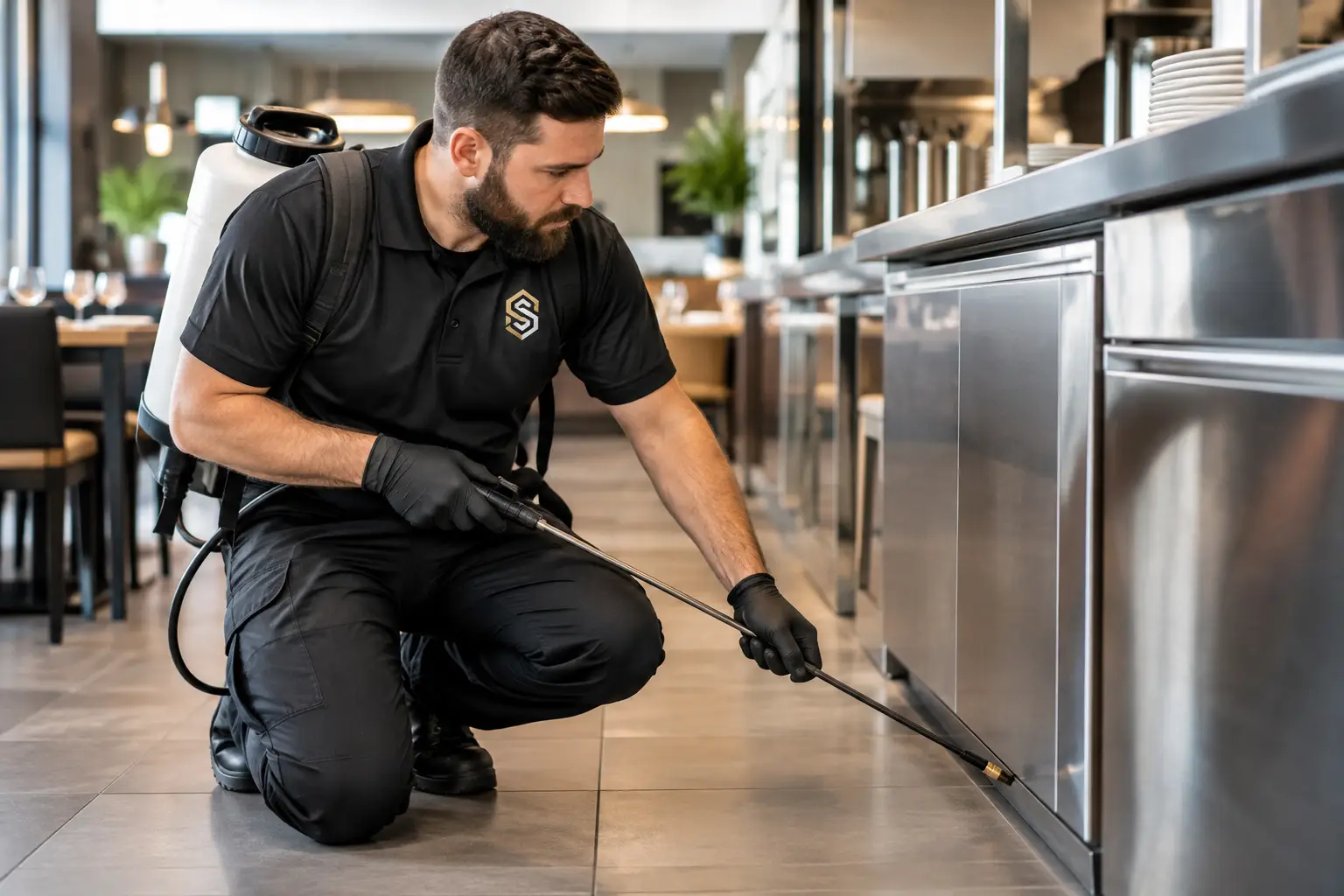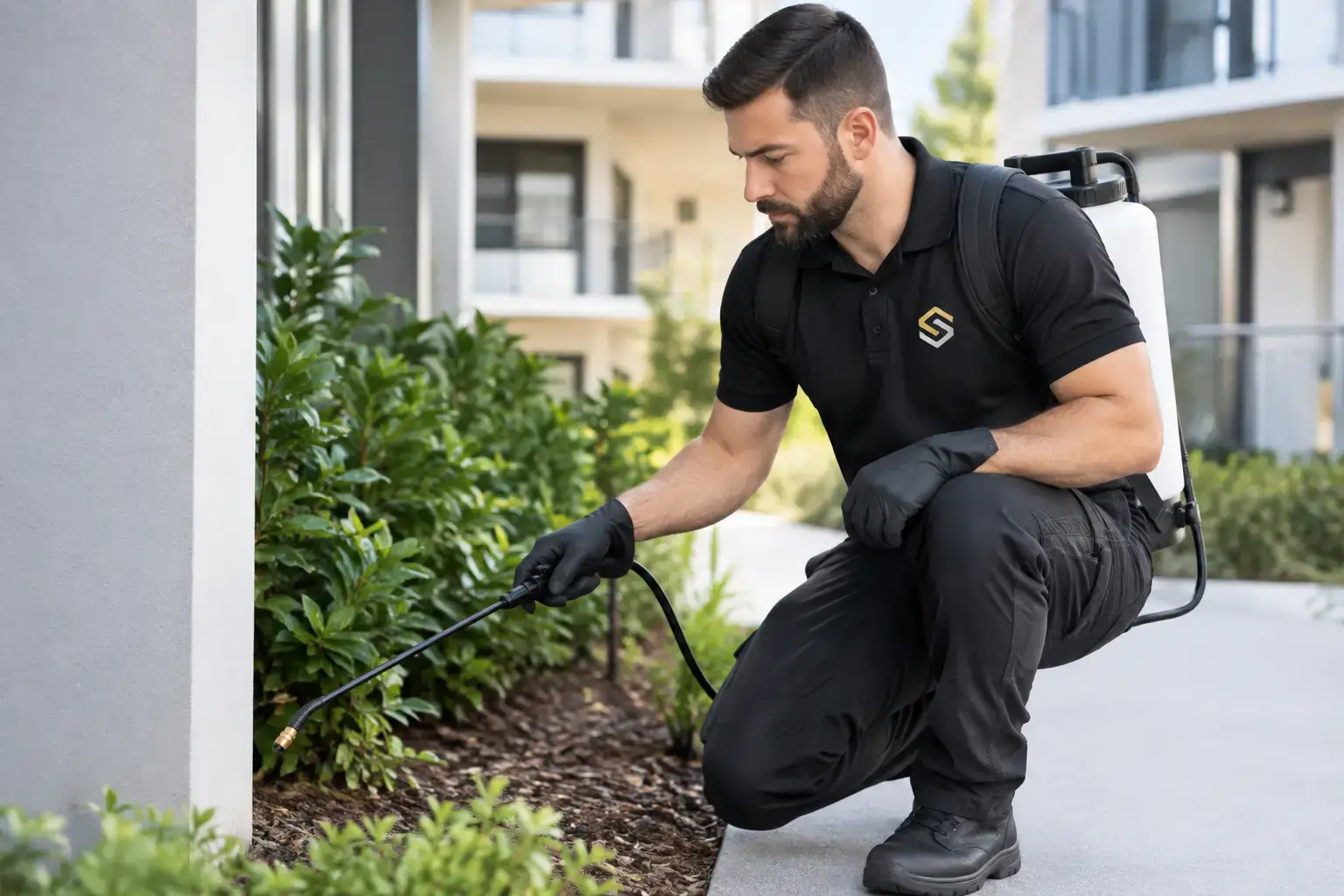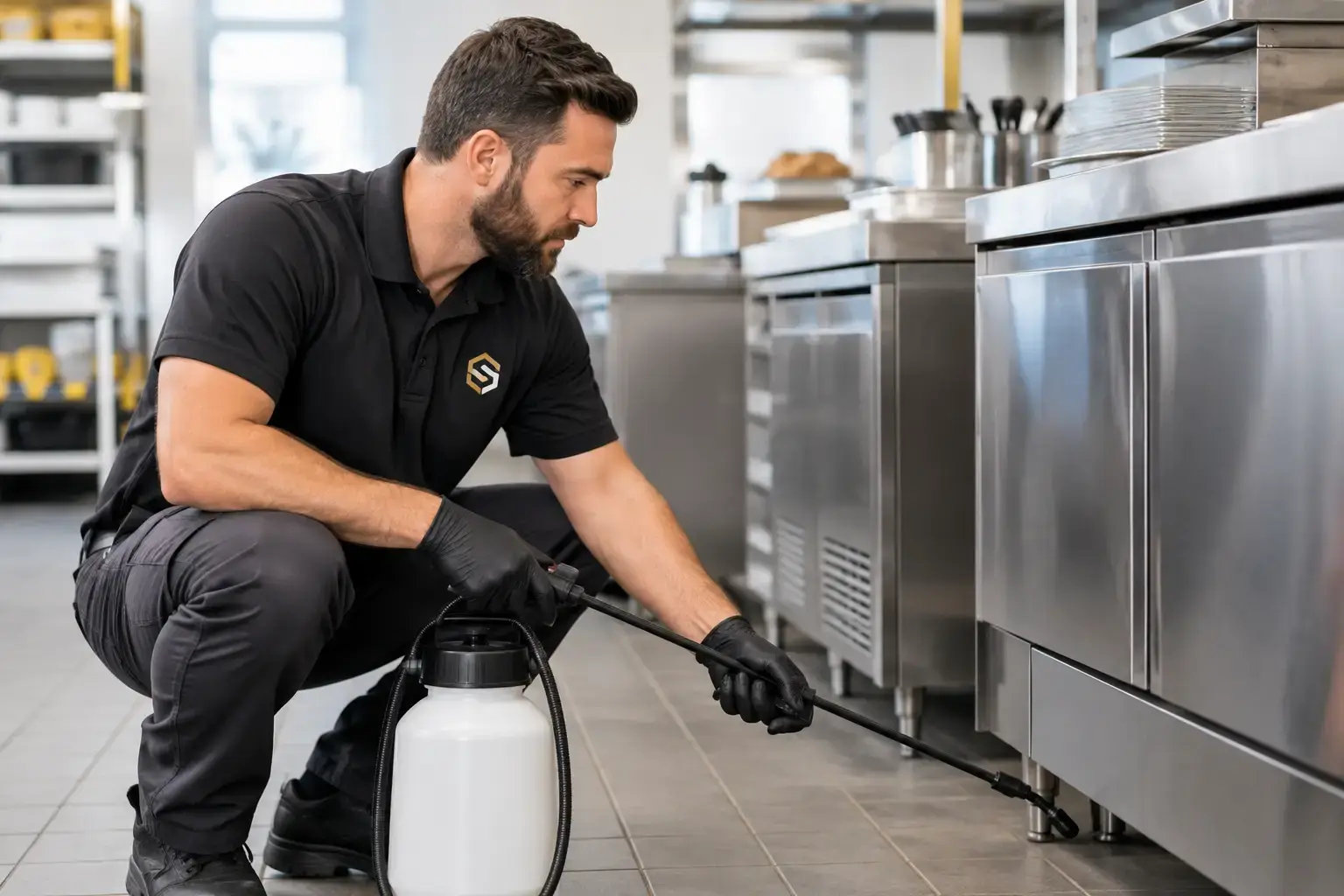
A cockroach under a bench, rodent droppings in a storeroom or birds nesting above a loading dock can quickly become more than a maintenance issue. Commercial pest control compliance requirements are about proving your business has identified pest risks, acted on them properly and kept records that stand up when someone asks questions.
For Queensland businesses, the right program is not a folder of old service reports. It is an active system that connects inspections, treatment, exclusion, staff action and follow-up. Pests are our problem to solve, not yours to live with - but compliance still needs a clear process on site.
What commercial pest control compliance means in practice
Compliance obligations vary by industry, premises type and the authority overseeing your operation. A café, food manufacturer, childcare centre, warehouse, body corporate complex and medical practice will not all be assessed in the same way. Your lease, customer contracts, quality systems and council requirements may also set their own expectations.
The common thread is straightforward: pest activity must be controlled in a way that protects operations, products, premises and people. You need evidence that the business is monitoring for pests, responding to findings and addressing the conditions that allow them to settle in.
For food businesses, pest management is commonly considered alongside food-handling procedures, cleaning, waste storage, building condition and stock control. In industrial and retail settings, the focus may extend to contamination, stock damage, electrical risks, workplace presentation and supplier expectations. For property managers and body corporates, recurring activity can point to building-entry issues, common-area maintenance or tenant behaviour that needs coordinated action.
A treatment alone may deal with the immediate issue. It does not automatically show that the source was investigated or that the next inspection has been planned.
The records an auditor or manager will expect to see
A well-run pest program creates a clear paper trail without burying your team in paperwork. The documents should make sense to a manager who was not present during the inspection.
Start with a site plan or pest-management register. It should identify key risk areas such as kitchens, bins, loading docks, plant rooms, roof voids, storerooms, staff amenities, ceiling spaces and external perimeters. If monitoring points or control devices are used, their locations and identification numbers should match the service documentation.
Each service report should record the date, areas inspected, activity found, actions taken and recommendations. It should also state any operational instructions, such as keeping a zone clear for treatment, repairing a door seal or changing how rubbish is stored. Vague notes like “treated as required” do not give a business much to work with during an audit or after a complaint.
Keep follow-up reports with the original service records. A recurring rodent issue, for example, should show what was found at each visit, whether activity changed, what exclusion work was recommended and who was responsible for completing it. This is how a program demonstrates control rather than repeated reaction.
For multi-site operators, consistency matters. Use the same reporting format, location naming and escalation process across premises where possible. It makes trends easier to spot and gives facilities teams a practical view of what needs attention first.
Commercial pest control compliance requirements start with the site
The strongest pest-management records in the world cannot compensate for a premises that is easy for pests to enter and feed in. Inspectors will usually look beyond the pest itself to the conditions behind the activity.
Rodents often exploit gaps under roller doors, damaged weather strips, penetrations around services and cluttered storage areas. Cockroaches can persist around warm equipment, floor wastes, leaking plumbing, cardboard stock and hard-to-reach grease build-up. Birds may use ledges, roof voids, solar panels or loading areas where food waste and shelter are available.
This is why source-focused diagnosis matters. If a technician finds evidence of rodents near a rear storeroom, the next question is not only how to reduce activity there. It is whether the rear door closes properly, bins are managed, stock is raised off the floor and external harbourage has been removed.
Not every recommendation has the same urgency. A gap into a food-preparation area should be escalated quickly. Reorganising surplus cardboard may be a lower-cost operational fix your team can complete internally. Good reporting separates urgent corrective work from sensible preventative housekeeping, so managers can make decisions without guessing.
Maintenance is part of pest control
Many compliance failures sit between departments. Pest management identifies an entry point, maintenance owns the repair, cleaning manages waste and the site manager needs to confirm the job has been completed. If no one owns the recommendation, it can appear again on every report.
Assign a named person to corrective actions and set a realistic due date. Keep evidence of completion, such as a maintenance record, work order or dated site note. The goal is not perfect paperwork for its own sake. It is a closed loop: issue found, action assigned, action completed, result checked.
Set a service schedule that reflects the risk
There is no single visit frequency that suits every commercial property. A busy hospitality venue with frequent deliveries, food waste and late trading has a different exposure profile from a low-traffic office. A warehouse beside bushland, a strata complex with shared bins and a food facility with strict customer standards each need their own plan.
Your schedule should consider the type of activity, seasonal pressure, nearby construction, building condition, opening hours, waste volume and the consequences of a pest sighting. Queensland’s warm conditions can also keep pressure high across much of the year, particularly where moisture, food and harbourage are available.
A planned program normally combines routine inspections with targeted response visits when activity is found. It may also include follow-up checks after a significant issue, because the first treatment is only one part of confirming whether the control measures are working.
Discreet servicing can be essential for customer-facing sites. However, discreet should not mean invisible to the people responsible for compliance. Managers need timely reports, clear escalation of urgent findings and a record of what requires their action.
Train staff to report, not diagnose
Your staff do not need to identify every insect or decide which control method is required. They do need to know what to report and where to record it. A short site procedure is usually more effective than an overcomplicated manual nobody reads.
Ask staff to report sightings, droppings, gnaw marks, damaged packaging, unusual odours, nesting material, insect clusters and bird fouling. They should also report the conditions pests use: overflowing bins, leaking taps, broken screens, damaged door seals and stock left against walls.
Give the report a destination. That may be a site manager, facilities coordinator or designated inbox. Include the location, time, what was observed and, where appropriate, a photo. Quick reporting helps distinguish a one-off sighting from a pattern that needs escalation.
Staff should not move monitoring devices, interfere with treatment areas or improvise pest-control measures. Doing so can disrupt the site plan and make records unreliable. Keep the process simple: observe, report, isolate affected stock or areas where required by your internal procedures, then let the responsible person coordinate the response.
What to do when an inspection finds activity
A finding is not automatically a compliance failure. What matters is the response. Treat the report as an action document, not an invoice attachment.
First, establish the location and likely source. Next, assess whether stock, food-handling areas, customers, tenants or operations are affected. Then complete the corrective actions that sit with your business, such as cleaning, waste removal, stock rotation, proofing or maintenance repairs. Finally, ensure the follow-up inspection checks whether those actions changed the conditions on site.
If the issue affects several tenancies or common areas, coordinate it at the property level. Treating one unit while leaving shared bin areas, roof spaces or service corridors unaddressed often shifts activity rather than resolving the underlying access problem.
Keep compliance useful, not performative
The best commercial pest-control program is easy to understand on a busy day. It tells you where the risks are, what was found, what has been done and what still needs attention. That is useful during an audit, but it is even more useful before an audit when it helps prevent disruption to trading.
Choose a provider that investigates the source, reports in plain English and follows through on the details. A clean, current record set and a site that acts on recommendations give managers something far more valuable than a stack of completed forms: confidence that pest risks are being actively managed.