A termite inspection is not a once-and-done box to tick after buying a home. In Queensland, termites can stay hidden in wall cavities, subfloors, roof timbers and garden structures while they feed. When people ask how often termite inspections in Queensland are needed, the practical answer is usually every 12 months at a minimum - and more often where the property or local conditions create higher risk.
That is not scare tactics. It is a sensible way to find activity early, before a small concealed entry point turns into expensive timber damage. Pests are our problem to solve, not yours to live with.
How often should termite inspections happen in Queensland?
For most Queensland homes, arrange a professional timber pest inspection at least once every 12 months. This aligns with the usual inspection interval expected for ongoing termite risk management under Australian practice.
A six-monthly inspection is often the smarter option for higher-risk properties. That can include homes with previous termite activity, older houses, properties beside bushland or reserves, homes with a lot of timber in contact with soil, and buildings in known termite-prone areas. Brisbane, the Sunshine Coast, Noosa, Gympie and the South Burnett all have conditions that can support termite activity, although risk can vary from one street to the next.
Three-monthly or six-monthly checks may also be appropriate where live termites have recently been treated, a monitored baiting program is in place, or a barrier system has specific maintenance requirements. In those cases, the schedule is not just about inspections. It is about checking that the termite management system is performing as intended and responding quickly if activity returns.
The key point is simple: an annual inspection is the baseline, not a guarantee. The right frequency depends on the building, its surroundings and its termite history.
Why Queensland properties need closer attention
Termites need food, moisture and a concealed route into timber. Queensland’s warm weather gives them long active periods, while heavy rain, humid summers and damp areas around homes can make concealed entry easier.
A modern slab home is not automatically safe. Termites can travel through tiny cracks, around plumbing penetrations, behind cladding and through concealed construction joints. Older raised homes have different weak points, including accessible subfloors, timber stumps, poor drainage and garden beds built up against the building.
A chemical barrier can reduce risk, but it does not make inspections unnecessary. Soil can be disturbed by landscaping, plumbing work, paving changes and erosion. Physical barriers can be bridged by soil, mulch or stored materials. Bait stations need scheduled monitoring. Every control method works best when it is backed by regular professional checks.
When to book inspections more often
You do not need to guess. A licensed technician can assess the property and recommend a schedule based on what is actually present. Still, it is worth stepping up from annual to six-monthly inspections if any of the following apply:
- The home has had termites before, including activity in a fence, retaining wall, shed or neighbouring property.
- There are trees, stumps, timber retaining walls, sleepers, mulch or stored timber close to the building.
- The property backs onto bushland, parkland, waterways or vacant land.
- Moisture issues are present, such as leaking taps, poor stormwater drainage, air-conditioner overflow or damp subfloor conditions.
- Renovations, new decks, landscaping or plumbing works have changed the area around the house.
- The property is vacant for long periods, rented out, or difficult for an owner to monitor closely.
For landlords and property managers, a fixed inspection cycle also creates a useful record. It shows that termite risk is being managed rather than ignored until a tenant reports damage. For body corporates and commercial sites, planned inspections help keep responsibilities clear across common areas, landscaped boundaries and multiple buildings.
What happens during a proper termite inspection?
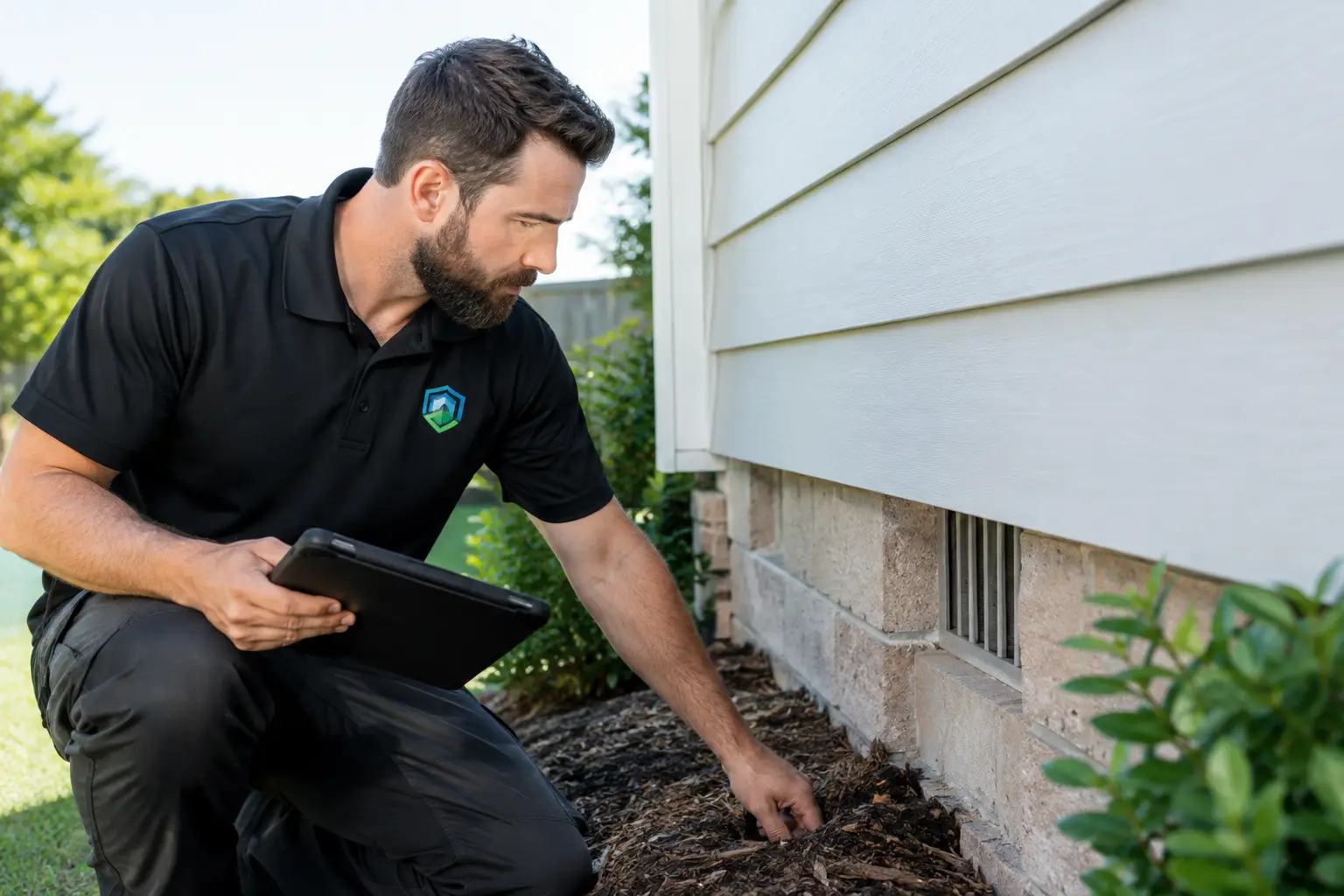
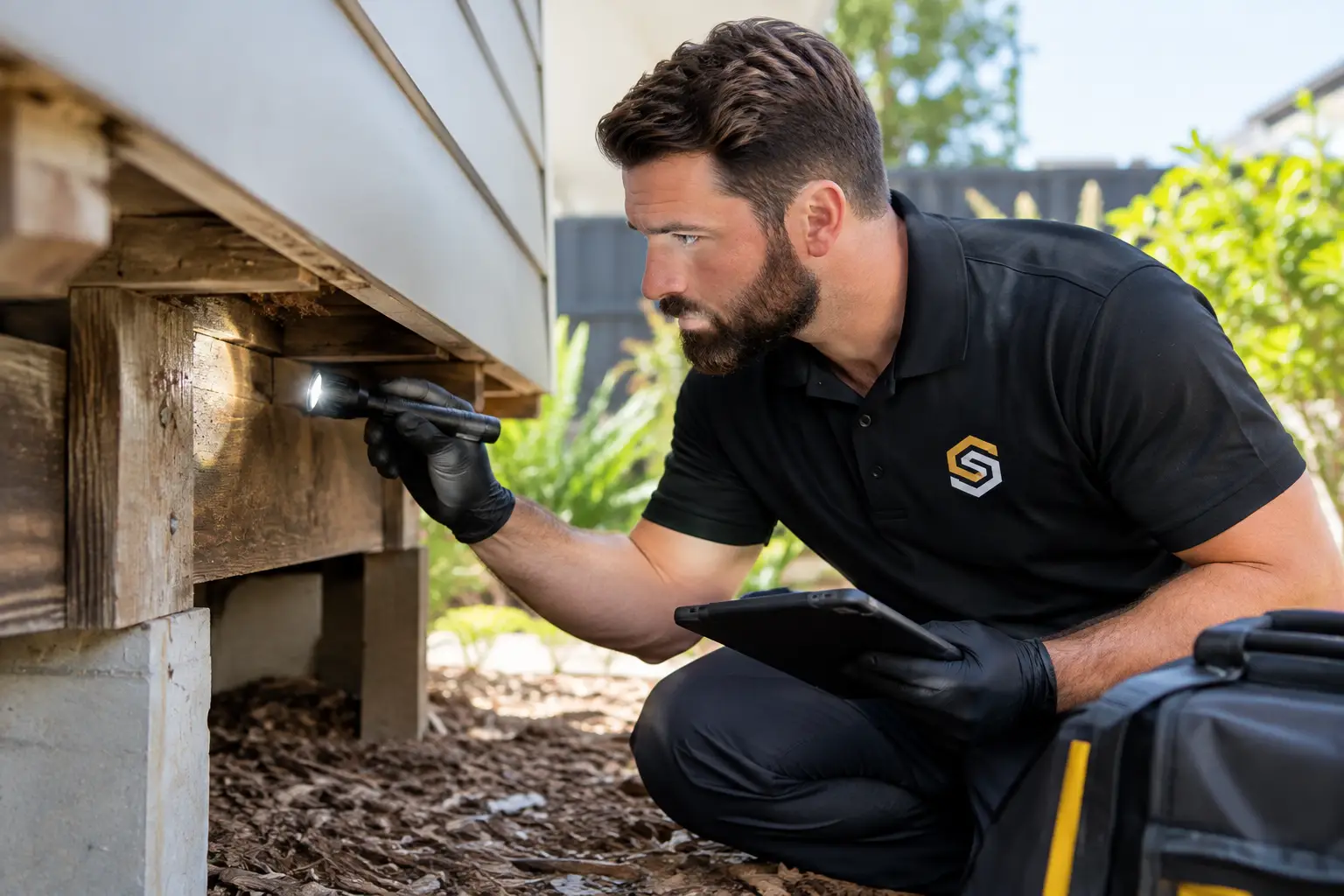
A proper inspection is more than someone walking around with a torch for 20 minutes. The technician should inspect accessible areas inside and outside the building, looking for termite workings, moisture conditions, timber damage and potential entry points.
That generally includes the roof void where accessible, subfloor, internal walls, skirting boards, cupboards, wet areas, garage, external walls, garden edges, fences and nearby timber structures. The technician may use a moisture meter, sounding tools and other detection equipment to identify areas that need closer attention.
Some areas may be inaccessible due to locked rooms, stored goods, low clearances, insulation, fixed linings or dense vegetation. A written report should clearly record those limitations. That is not a minor detail. If an area cannot be inspected, it remains an unknown risk and may need clearing, access work or a follow-up visit.
At Syndicate Pest Solutions, the goal is to identify the source of risk, not just point at a mud tube and leave. You should receive clear findings, practical recommendations and a record of what was inspected, what could not be accessed and what needs to happen next.
Do not wait for obvious signs
Termites are good at staying out of sight. By the time paint bubbles, a door frame sounds hollow or a floor feels soft, feeding may have been happening for some time.
Book an inspection promptly if you notice mud-like tubes on walls or piers, fine dirt appearing from timber, tight-fitting doors or windows, hollow-sounding skirting boards, sagging timber, unexplained cracks in plaster, or flying insects and discarded wings around lights. Flying termites do not always mean the house is under attack, but they are a reason to check the property properly.
Do not disturb suspected termites by spraying them with household insecticide, breaking open damaged timber or removing their workings. That can cause a colony to abandon one visible area and continue feeding elsewhere. Leave the evidence in place and arrange an assessment.
A workable termite plan for homes and businesses
The best termite plan is organised and repeatable. Start with an inspection that establishes the property’s current condition and identifies risk factors. From there, the technician can recommend the right interval, whether that is annual, six-monthly or a more frequent monitoring schedule.
If treatment is needed, the next step may involve a chemical treatment, a physical or chemical barrier, baiting, moisture correction, building maintenance or a combination of measures. There is no single treatment that suits every structure. The right solution depends on construction type, access, termite species, active workings and the surrounding environment.
For commercial sites, inspections can be built into a scheduled pest-management program with reports and service records kept together. This is particularly useful for hospitality, retail, industrial premises and multi-site portfolios where disrupted trading and missing paperwork both create problems.
Between visits, keep soil and mulch below weep holes, avoid storing timber against the building, repair leaks quickly, maintain drainage and trim vegetation away from external walls. These steps reduce conducive conditions, but they do not replace professional inspections.
Frequently asked questions
Is a termite inspection required every year in Queensland?
For most properties, annual inspections are the sensible minimum. More frequent inspections are recommended where risk is elevated, a termite management system requires monitoring, or the building has previous activity or poor access conditions.
Does a termite barrier mean I can skip inspections?
No. A barrier is one layer of protection. Landscaping, soil movement, building changes and maintenance issues can affect its performance. Regular inspections check for termite activity and conditions that may bypass the system.
Should I get an inspection before buying a property?
Yes. A pre-purchase timber pest inspection can identify visible termite activity, damage and risk conditions before settlement. It cannot inspect areas that are inaccessible, so read the report carefully and act on any recommended further investigation.
Can tenants arrange a termite inspection?
Tenants should report suspected termites or damage to the property manager or owner straight away. The owner or managing agent can then arrange licensed inspection and treatment, with access coordinated around the occupants.
A termite schedule should give you confidence, not another job to chase. Set the next inspection date before the current report is filed away, keep the property accessible, and deal with changes around the building as they happen. That is how termite risk stays managed instead of becoming an expensive surprise.