A termite bait station is not a one-off poison box that solves a problem overnight. How termite baiting systems work is more strategic than that: they use termite feeding behaviour to place a slow-acting treatment back into the colony. When the system is installed, checked and managed properly, it can form a valuable part of a long-term termite management plan for Queensland properties.
That management matters. Subterranean termites can travel underground, enter through tiny gaps and keep working out of sight. By the time obvious damage appears, they may have been feeding for months. A baiting program is designed to find termite activity early, respond when it is detected and keep monitoring for future pressure.
How termite baiting systems work
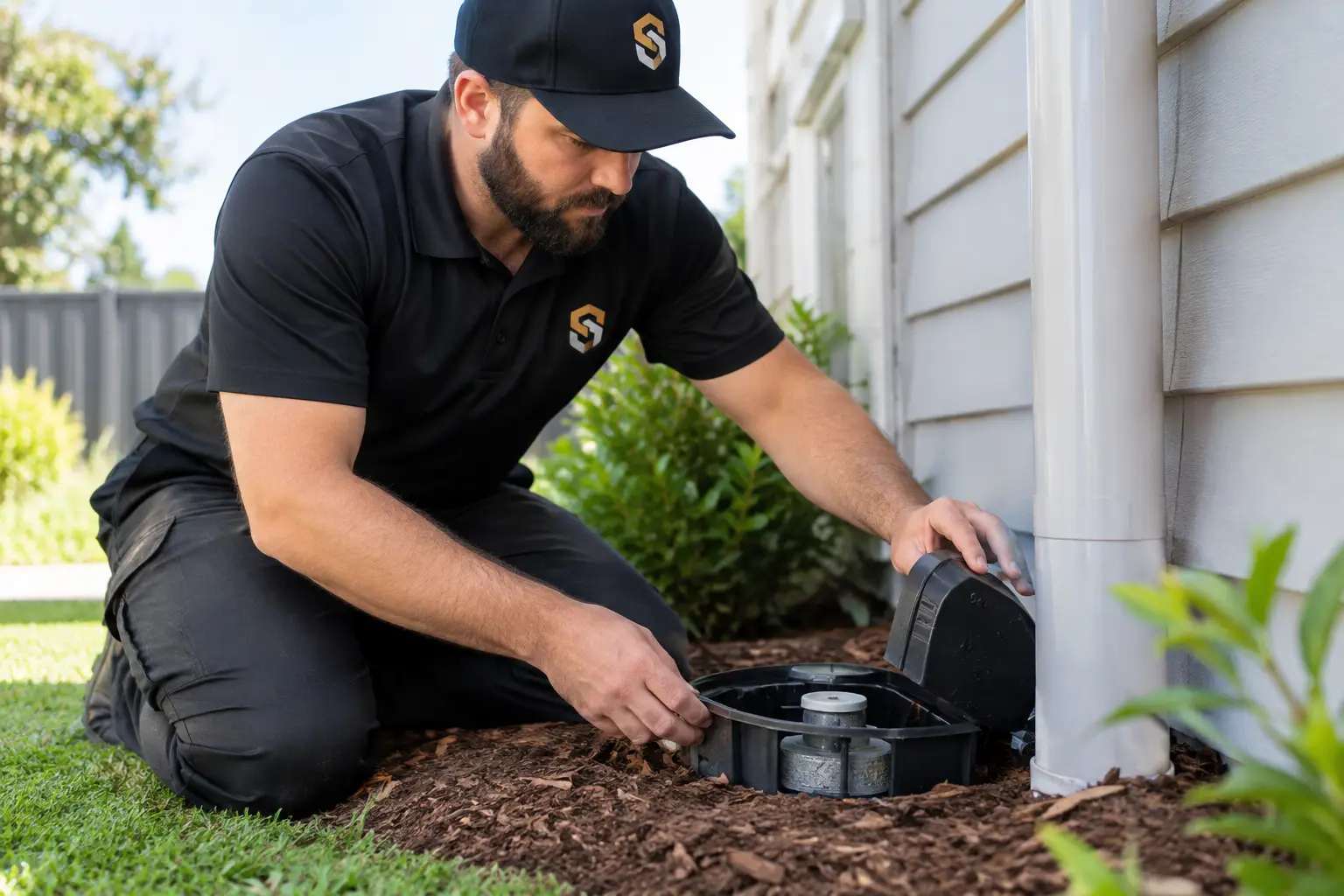
Most baiting systems use stations installed around the outside of a building, usually in the soil. The technician positions them in locations where termites are likely to forage, taking account of the property layout, garden beds, drainage, previous termite activity and construction details. Some systems may also be used above ground when termites are active inside a structure.
Initially, in-ground stations contain timber or another material that termites will readily feed on. This is called an interceptor. It is not the bait itself. Its job is to make the station an appealing food source and give a technician a controlled place to identify activity before termites reach more of the building.
At scheduled inspections, the stations are carefully checked for signs of termites. If active termites are feeding in a station, the interceptor is replaced or supplemented with a registered bait product. The bait is cellulose-based, so it is attractive to feeding termites, but it also contains an ingredient that interferes with their normal growth process.
The treatment is deliberately slow acting. Termites do not simply die at the station, which could cause the rest of the colony to avoid it. Instead, workers continue feeding and sharing the material through grooming and food exchange. Over time, this can affect other termites in the colony, including those that never enter the station.
The aim is colony suppression or elimination, depending on the species, the colony’s condition and how consistently it feeds on the bait. No responsible technician should promise that a single station visit will permanently remove every termite risk from a property. Queensland has active termite populations, and new colonies can move into the area later. That is why ongoing monitoring is part of the job, not an optional extra.
Why termites take the bait
Subterranean termites are always looking for cellulose - the material found in timber, cardboard, paper and many garden products. Worker termites forage widely and bring food back to support the colony. A well-positioned station gives them another food source on their route.
There is no guarantee termites will find or feed in a particular station straight away. Rainfall, soil moisture, season, nearby timber, mulch, construction changes and termite species can all affect activity. A baiting system works best as a monitored network around a property, not as a set-and-forget product dropped into the garden.
What happens after termites are found
When a station becomes active, speed and care both matter. The technician records the location, termite activity and bait consumption, then checks the station at intervals suited to the product label and the level of feeding. The bait needs to remain available while termites are using it.
It is also important not to disturb active termites unnecessarily. Digging around an entry point, spraying household insecticide or removing damaged timber before advice is given can cause termites to abandon that area and move elsewhere. They have not necessarily gone. They may simply become harder to locate.
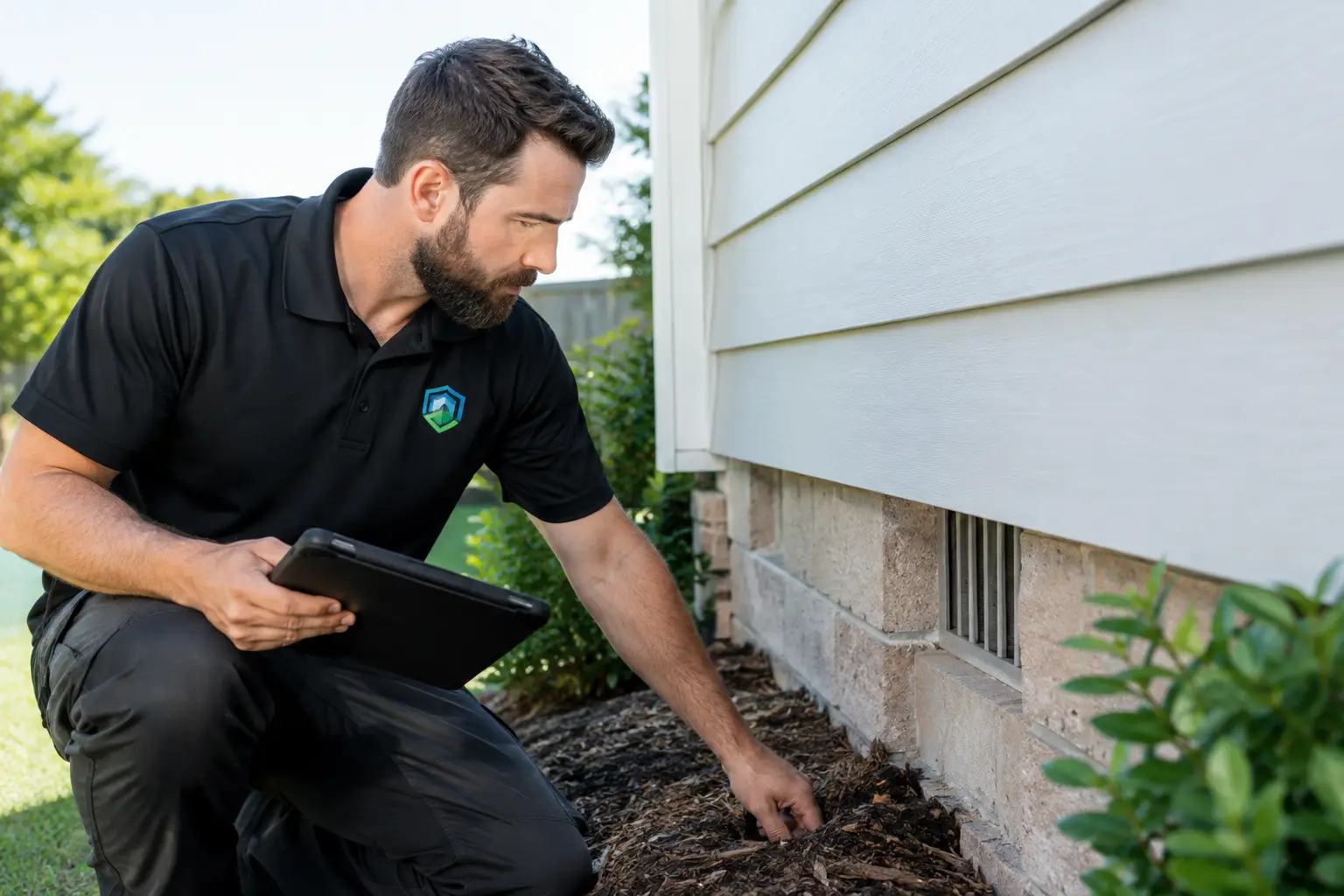
A proper response starts with an inspection of the accessible building perimeter and any known activity. The technician can then explain whether baiting is being used as a monitoring measure, an active treatment, or both. You should receive clear findings and a written record of what was checked, what was found and what happens next.
For owners, landlords and property managers, that paperwork is more than a nice-to-have. It creates a usable history of termite activity, treatment and follow-up. It also helps make sure nothing gets lost between tenants, maintenance teams, body corporate managers or a change of ownership.
Baiting versus a chemical barrier
Baiting systems and chemical barriers solve different parts of the termite problem. A chemical barrier is applied to soil or construction zones to create a treated area that termites must encounter as they approach the structure. Depending on the product and application, it may repel, deter or control termites attempting to enter.
Baiting targets foraging termites and can potentially affect the colony through continued feeding. It is often useful where a full chemical barrier is impractical, where there are complex construction details, or where a property owner wants an ongoing monitoring program. It can also be used alongside other termite management measures.
The right option depends on the building, termite evidence and site conditions. A slab home with accessible external soil has different treatment options from a townhouse with tight boundaries, extensive paving, retaining walls or concealed entry points. There is no prize for choosing the cheapest-looking method if it leaves obvious gaps in protection.
In some cases, a technician may recommend a combined approach: address current activity with baiting, improve termite entry protection where possible and schedule inspections. Termite management is about reducing risk, not pretending risk disappears.
What a managed baiting program looks like
A reliable program follows a simple path: inspect, treat, monitor and report. Before stations go in, the property should be assessed for construction risks, moisture issues, timber in contact with soil, garden conditions and signs of active termites.
Stations are then installed in suitable positions and recorded. At each service, they are inspected, refreshed where needed and assessed for termite activity. If bait is introduced, follow-up checks are scheduled closely enough to manage feeding and confirm the treatment’s progress.
The program should not ignore the building itself. Regular timber pest inspections remain necessary because termites can enter from places a station has not intercepted. Roof voids, subfloors, weep holes, expansion joints, plumbing penetrations and concealed wall areas all deserve attention where accessible.
For commercial sites and strata properties, planned service matters even more. A documented schedule, service reports and clear actions for site managers help protect assets without creating disruption for residents, staff or customers. Pests are our problem to solve, not yours to live with.
Are termite baiting systems safe around children and pets?
Bait stations are installed in locked or secured housings and are generally placed outdoors or in controlled treatment locations. Used according to the product label by a licensed technician, they are designed to limit exposure while targeting termite activity.
That does not mean the stations should be opened, moved or treated like garden ornaments. Keep children and pets from interfering with them, and tell the technician if landscaping, excavation, new paving or renovations are planned. Moving a station or changing the surrounding ground can affect both access and monitoring results.
Common questions about termite baiting
How long does termite bait take to work?
It depends on how quickly termites find the station, how strongly they feed and the size and condition of the colony. Active baiting can take weeks or longer. The slow action is intentional, as it gives termites time to share the bait through the colony.
Will baiting stop termites from entering my house?
Baiting reduces risk by intercepting foraging termites and treating activity when it occurs, but it cannot create an impenetrable shield around every building. Regular inspections, maintenance and good construction practices remain essential.
Can I install termite bait stations myself?
You can buy products, but effective termite management depends on correct placement, accurate identification, compliant treatment use and disciplined follow-up. Missing active termites or disturbing them can make a small issue harder to manage. Professional monitoring provides a clearer record and a more accountable response.
Do I still need an annual termite inspection?
Yes. A baiting system monitors specific stations, while an inspection examines accessible parts of the building for signs of termites, conditions that attract them and possible entry points. One does not replace the other.
If you have found suspicious mud leads, hollow-sounding timber, bubbling paint or unexplained damage, leave the area alone and arrange an inspection. Early action gives you more options, clearer evidence and a better chance of keeping a termite problem contained.