A skirting board that sounds hollow, a door that suddenly sticks or a thin brown line climbing a wall can be easy to dismiss. But the signs of termites in the house are often quiet because termites work out of sight, inside timber, wall cavities and beneath floors. By the time damage looks obvious, the colony may have been feeding for months.
Queensland homes face a high termite risk, particularly where there is timber, moisture and a concealed path from soil to building. You do not need to identify the species or pull anything apart. You do need to know what deserves a proper inspection.
10 clear signs of termites in your house
1. Mud tubes on walls, stumps or pipes
Subterranean termites need moisture and protection while travelling between their nest and a food source. They build pencil-thin to finger-width mud tubes along brickwork, concrete slabs, piers, foundation walls and service pipes.
These tubes are made from soil, saliva and other material. They can run from the ground up to timber framing, flooring or cladding. A tube may be active, old or abandoned, so do not assume the risk is over if it looks dry. Leave it in place and have it assessed.
2. Timber that sounds hollow or papery
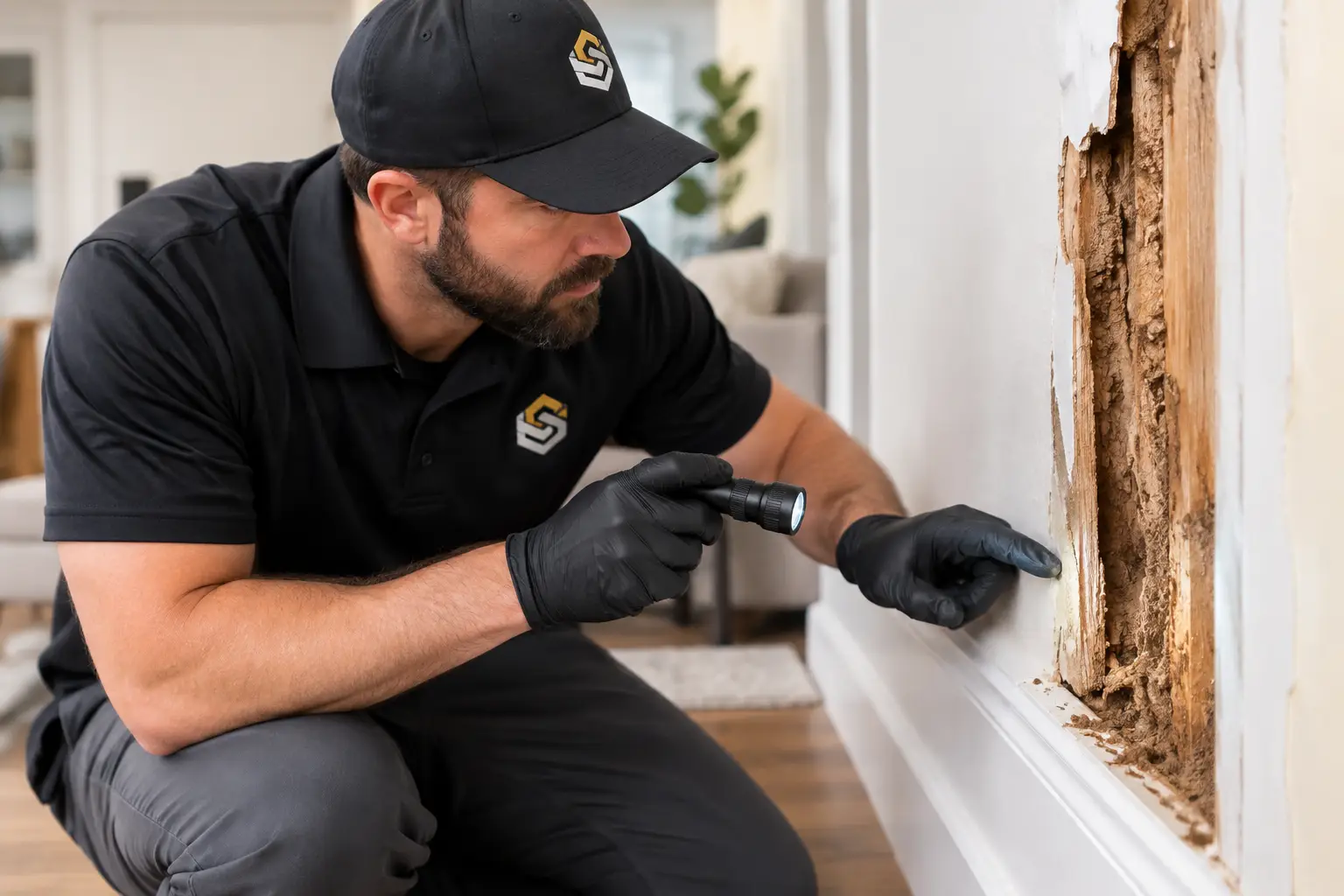
Termites usually consume timber from the inside out, following the softer grain and leaving a thin painted or varnished surface behind. Tap a suspicious skirting board, door frame or timber post and it may sound hollow compared with nearby timber.
This is not a DIY test for every wall in the house. It is simply a reason to call in a licensed technician, especially if the timber feels weak, dents easily or breaks with very little pressure.
3. Doors and windows that start sticking
A sticking door does not automatically mean termites. Seasonal humidity, settling and worn hinges can all be responsible. However, termites can damage door frames and surrounding timber, causing surfaces to warp or shift.
Take notice when the problem is new, affects more than one opening or appears alongside cracking paint, hollow timber or mud tubes. The pattern matters more than one difficult door.
4. Blistered paint or bubbling plaster
Paint that bubbles, peels or looks water-damaged can point to a plumbing leak or dampness. It can also indicate termite activity behind the surface. Termites introduce moisture as they travel and feed, which can affect paint, plasterboard and timber trims.
Treat it as a clue, not a diagnosis. Moisture itself creates termite-friendly conditions, even where termites are not yet active. Either way, it is worth finding the source before a small maintenance issue becomes a larger repair.
5. Fine dust or pellets near timber
Not all termite evidence looks the same. Some termites produce tiny, hard, pellet-like droppings known as frass. You may find small piles beneath a timber beam, window frame, cupboard or furniture item, sometimes close to a pin-sized hole.
Subterranean termites, the group commonly responsible for serious structural damage in South East Queensland, generally use their workings and mud leads rather than leaving visible pellets. Fine dust can also be sawdust from other insects or renovation work. Keep a photo or sample if you can, but avoid spraying or cleaning away all the evidence before an inspection.
6. Swarming insects or discarded wings
Flying termites, also called alates, leave their colony to establish new nests. They are often seen after warm, humid weather or rain. A swarm indoors, or a collection of equal-sized discarded wings on a windowsill, near a light fitting or by a door, deserves attention.
Termites are often confused with flying ants. Termites have straight antennae, a broad waist and four wings of roughly equal length. Flying ants have bent antennae, a pinched waist and differently sized wings. You do not need to settle the argument yourself. A clear photo can help a pest professional identify what you have seen.
7. Damaged skirting boards, architraves or flooring
Look for unexplained cracks, soft spots, sagging floorboards, loose tiles or skirting boards that separate from the wall. Termite damage can be hidden behind a surface that still looks largely normal, so visible movement or weakness is a late warning rather than an early one.
Do not rely on a quick look around the lounge room. Termites can access a property through concealed areas such as subfloors, roof voids, plumbing penetrations, retaining walls and slab edges.
8. Clicking sounds from a wall
In a very quiet room, large termite colonies can sometimes make faint clicking, tapping or rustling sounds as workers move and soldiers signal danger. It is not a dependable way to find termites, and most household noises have a less dramatic explanation.
Still, if the sound is coming from a wall alongside other warning signs, make a note of the location. It gives the inspector a useful starting point.
9. Live termites in timber or soil
If you expose pale, soft-bodied insects while gardening, moving stored items or doing repairs, stop work. Termites avoid light and air, so they may retreat quickly into the timber or soil.
Do not spray them with household insecticide, flood the area or rip out the affected material. That can scatter the colony, remove evidence and make professional treatment more complicated. Covering the opening loosely and arranging an inspection is usually the smarter move.
10. A history of termites or conditions that attract them
Previous termite treatment, nearby activity or an old damage report does not mean your home is currently infested. It does mean regular inspections should be taken seriously. Termite barriers and bait systems need ongoing checks, and no treatment should be treated as a permanent set-and-forget solution.
Other risk factors include leaking taps, poor drainage, timber stored against the house, garden beds built above weep holes, dense vegetation against walls and concealed slab edges. Reducing these conditions helps, but it does not replace a professional inspection.
What to do when you spot signs of termites in the house
First, stay calm and protect the evidence. Take a few photos from a safe distance, note where and when you saw it, and avoid disturbing mud tubes, damaged timber or live insects. If you are renting, notify the property manager or landlord promptly in writing. If you manage a strata or commercial property, record the location and arrange access to relevant common areas or tenancy spaces.
The next step is a termite inspection. A proper inspection is more than a quick walk around with a torch. The technician should assess accessible internal and external areas, likely entry points, moisture conditions, subfloor or roof spaces where available, and signs of past or current activity. You should receive a written report explaining what was inspected, any limitations, the findings and recommended next actions.
If termites are confirmed, treatment depends on the species, construction type, colony location and extent of activity. A monitored baiting program may suit one property. A chemical or non-chemical barrier may suit another. In some cases, targeted treatment and follow-up monitoring are needed. The right answer is based on the site, not a one-size-fits-all spray.
Prevention is an ongoing job
Most homeowners benefit from a professional termite inspection at least annually. Properties with a known history, high moisture, extensive timber landscaping, difficult access or active treatment systems may need a different inspection schedule. Your report should make that clear.
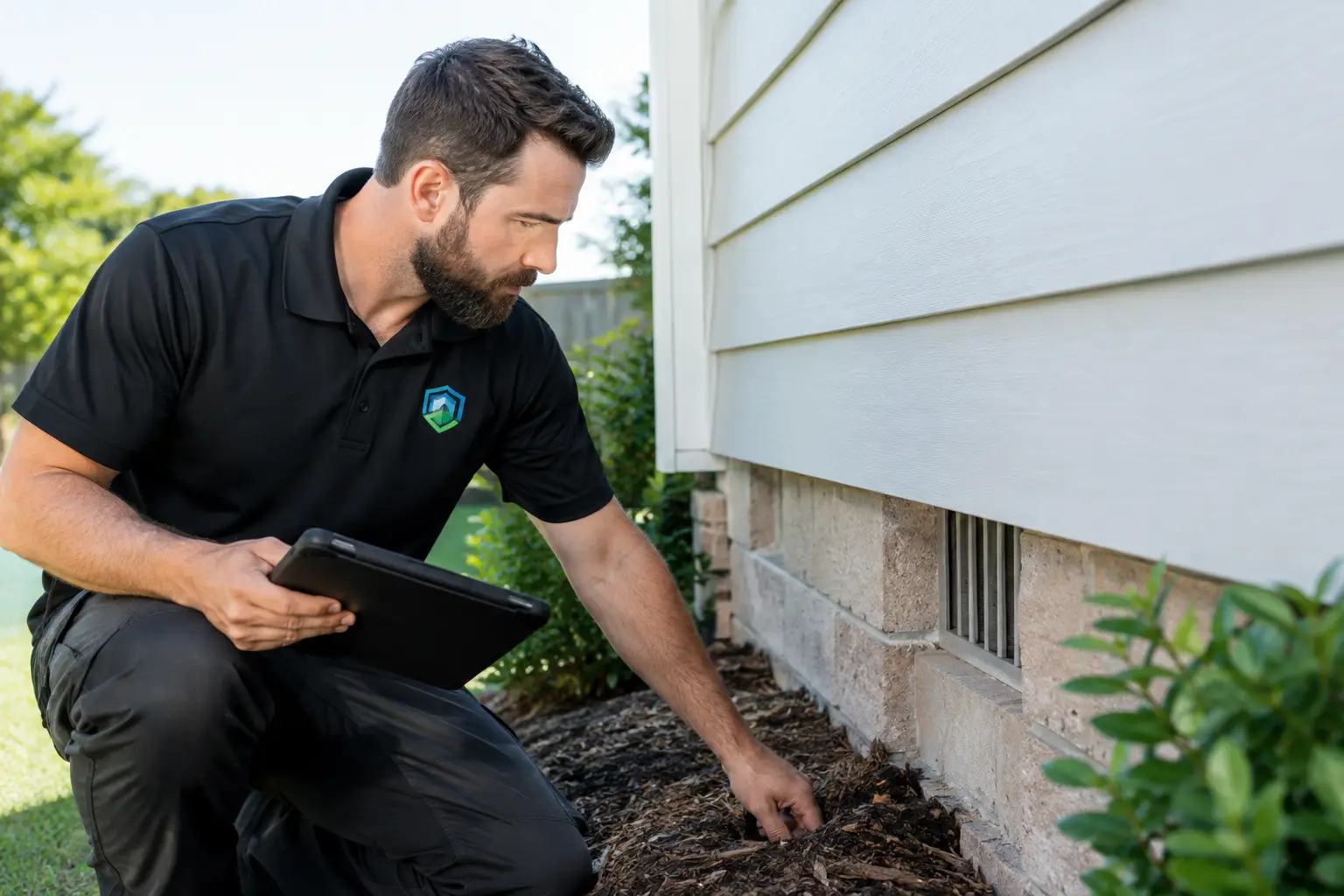
Keep weep holes visible, fix leaks promptly, store timber and cardboard away from the building, and avoid piling mulch or soil against external walls. These practical changes reduce concealed access and moisture, but termites can still enter through gaps that are hard to see.
Syndicate Pest Solutions takes a straightforward approach: identify the risk, inspect properly, treat the source and follow up with clear documentation. No guesswork, no spray-and-go shortcuts.
A termite problem is not a reason to panic, but it is not something to put off until the next renovation either. The earlier a suspicious sign is checked, the more options you have to protect the home you have worked hard for.