A wasp nest beside the front door, under the eaves or near the clothesline changes how you use your own home. The problem is not just the nest itself. It is the flight path around it, the chance of disturbing the colony, and the risk of a painful sting when someone least expects it. If you need wasp nest removal near house, the smart move is to give the area space and deal with it before the nest becomes a bigger issue.
Queensland wasps can set up in places people use every day: under rooflines, in wall cavities, sheds, letterboxes, garden structures and around pool equipment. Something has moved in, and it is not paying rent.
Why a nest near the house needs attention
A small paper wasp nest can look manageable from the ground. That does not mean it is sensible to knock it down. Wasps defend their nest when they sense vibration, sudden movement or a nearby threat. A rake, broom, hose or DIY spray can turn a quiet problem into a swarm around the person holding it.
Location matters as much as size. A nest high under an eave may be less urgent than one beside a gate, entrance, outdoor dining area or children’s play space. A nest near a bedroom window can also become disruptive if wasps repeatedly enter through an open window or gather around outdoor lights after dark.
People with known reactions to insect stings should be particularly cautious. So should households with young children, pets that investigate everything, or visitors who may not see a nest before walking close to it. Keeping the situation organised early is far easier than responding after somebody has been stung.
Do not turn a nest into a bigger problem
The temptation to handle a visible nest yourself is understandable. But several common approaches create more risk than progress.
Do not hit, burn, flood or pull down the nest. Do not block the entry point if wasps are using a wall cavity, roof void or gap around cladding. Closing that access can force active wasps to find another route, sometimes into the home.
Avoid standing on ladders close to a nest. Even a minor reaction can cause a loss of balance, and nests under eaves often require awkward access. It is also best to keep mowing, hedge trimming and pressure washing away from the immediate area until the nest has been assessed.
If the nest is near a walkway, calmly redirect people around it. Close nearby windows if wasps are entering the house, and bring washing in if the nest is close to the line. You do not need to panic. You do need to stop treating the nest like a weekend chore.
Wasp nest removal near house: what a proper service involves
A proper wasp treatment starts with identifying where the activity is coming from and how people are likely to encounter it. This is particularly important when the nest is concealed. You might only see wasps disappearing behind fascia boards, through a roof gap, beneath decking or into a retaining wall.
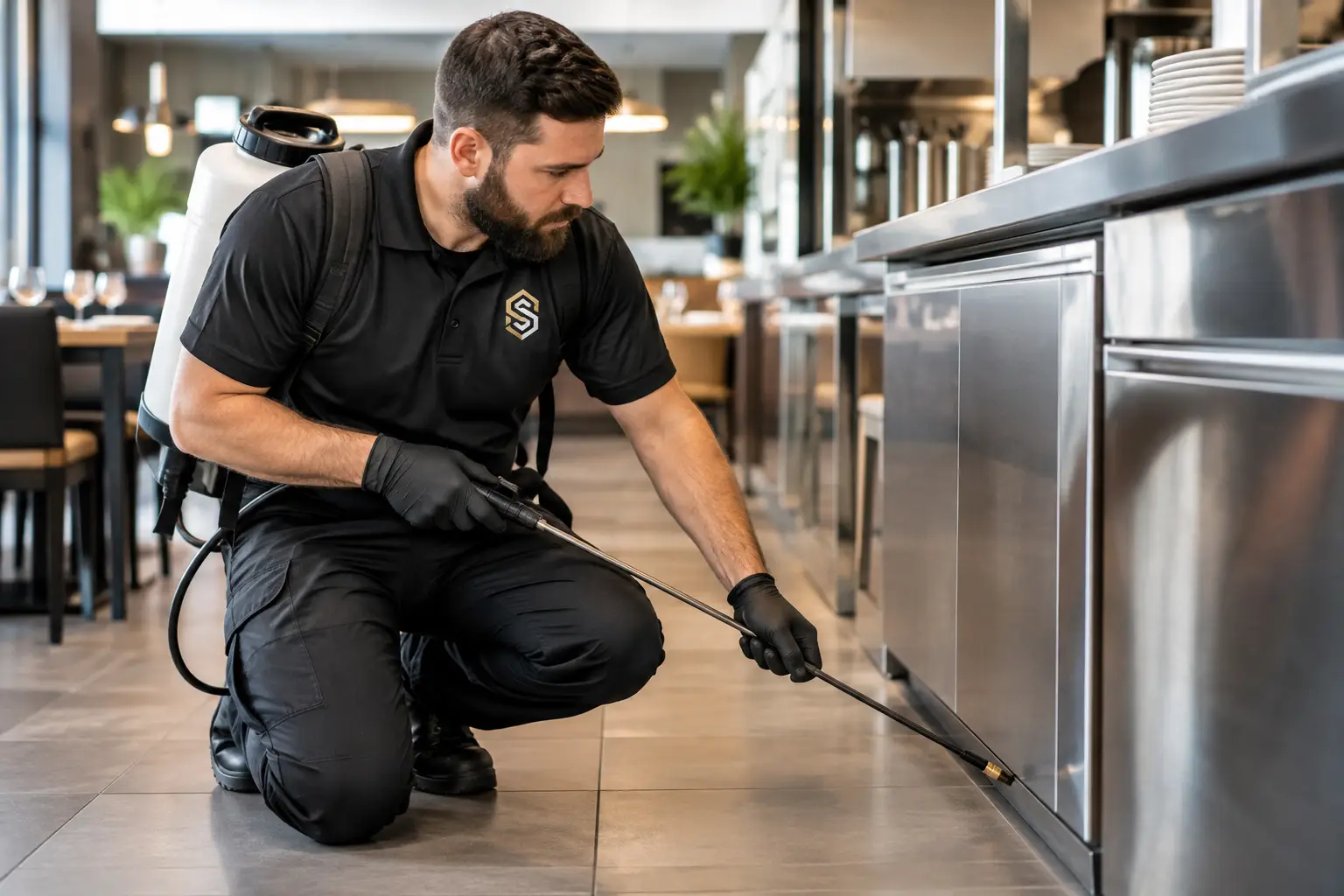
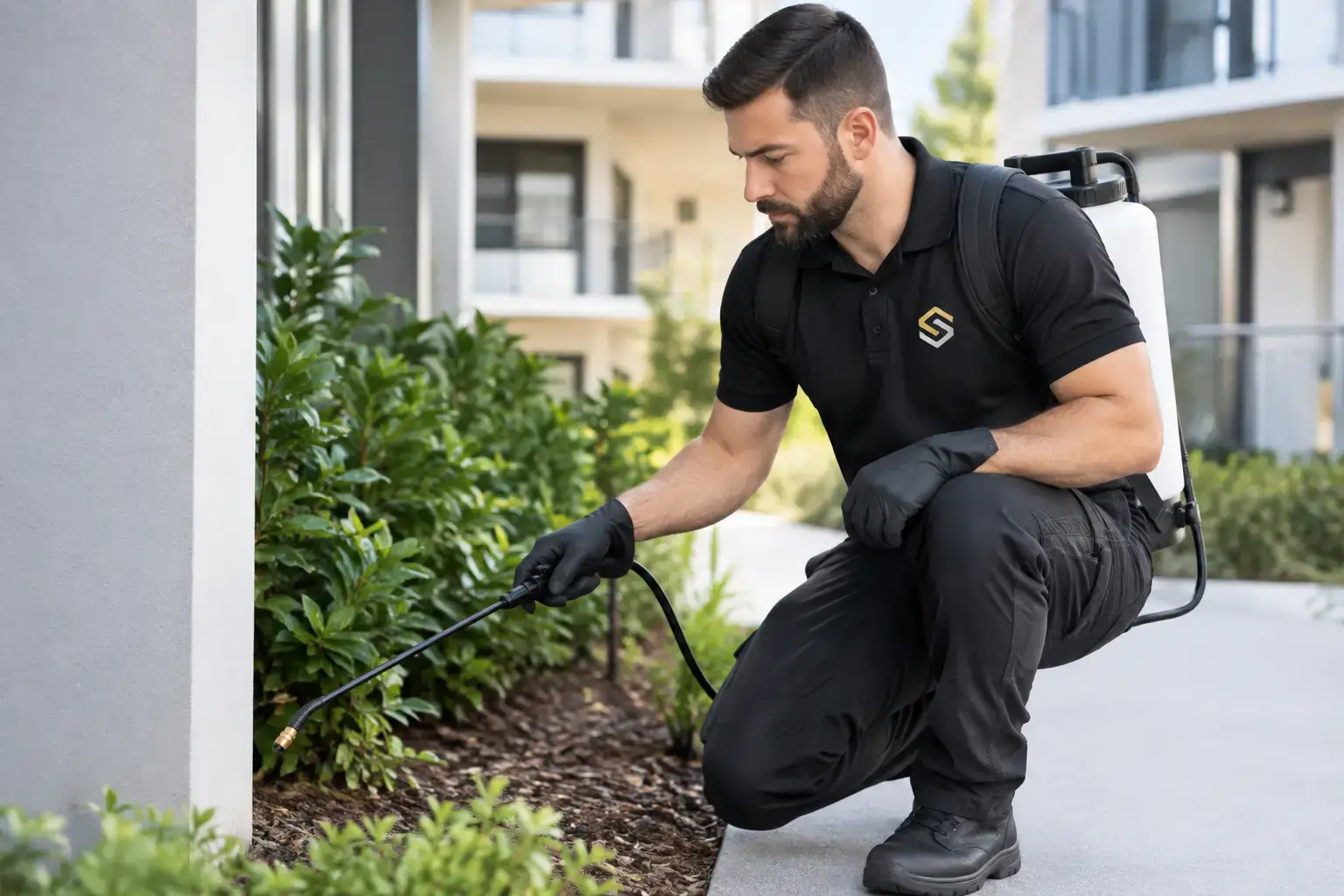
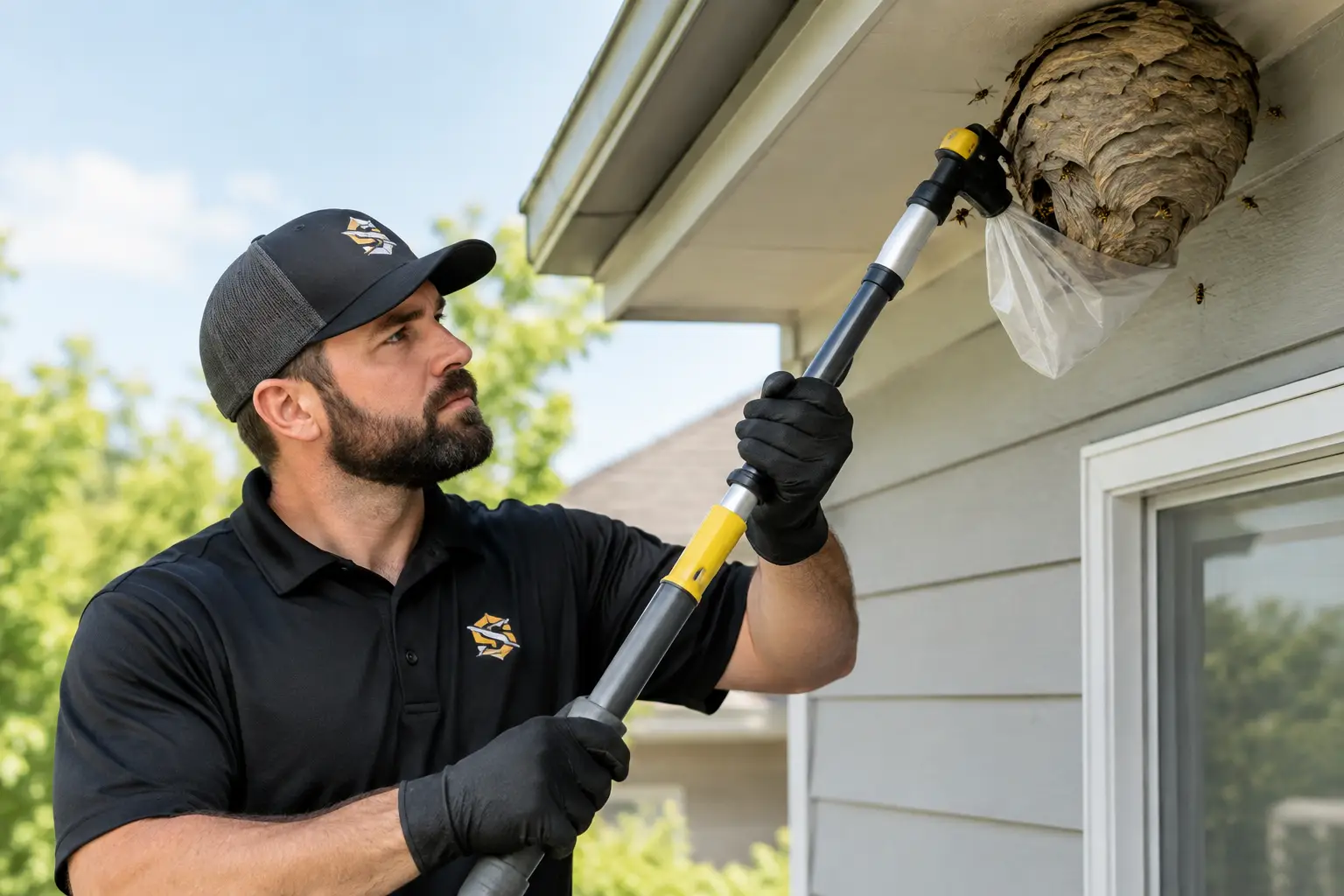
The technician assesses the nest location, access requirements, level of activity and whether there are likely to be multiple entry points. The treatment method is selected to suit the site, rather than using a one-size-fits-all response. For an exposed paper nest, access may be straightforward. For activity inside a wall or roof space, the job needs a more controlled approach.
After treatment, some wasp movement can continue for a period as returning workers encounter the treated area. That is why clear post-service advice matters. Residents need to know which areas to avoid, whether any access points need monitoring, and when it is appropriate to resume normal use of the space.
At Syndicate Pest Solutions, the approach is simple: describe the issue, inspect it properly, treat the source and follow up where the site requires it. Pests are our problem to solve, not yours to live with.
How to tell if the nest is active
Steady traffic is the clearest sign. Watch from a safe distance for wasps repeatedly travelling to one point, especially during daylight hours. A single wasp investigating flowers or a bin does not necessarily mean there is a nest on the property. A regular line of wasps entering a gap is different.
Paper wasp nests are often visible as open, umbrella-shaped structures under eaves, pergolas and sheltered corners. Other nests may be hidden, with activity concentrated around a small hole, roof edge or crack in masonry. Do not get closer for a photo. A clear description of the location, height and activity level is more useful than putting yourself in the flight path.
It also helps to consider recent changes around the property. Wasps may become noticeable after pruning exposes a nest, after renovations disturb a cavity, or when warmer weather increases activity. In strata buildings and commercial sites, a nest in a shared area should be reported promptly so access can be managed for residents, staff and visitors.
When removal is urgent
Most nests should be dealt with promptly, but some situations need faster action. Treat the matter as urgent when wasps are entering living areas, gathering at a main entrance, nesting near a school or childcare setting, or building in a place where workers must pass repeatedly.
A nest near food service, loading areas, outdoor seating or customer entrances can interrupt business operations and create a poor experience for visitors. Property managers and body corporates also need a clear record of the issue, what was found and what action was taken. Good pest management is not just about removing a visible problem. It is about keeping the site usable and the response accountable.
If a person has been stung and develops breathing difficulty, facial or throat swelling, dizziness or widespread hives, seek urgent medical help. Do not wait to see if symptoms settle.
Preventing the next nesting attempt
No property can be made unattractive to every wasp, particularly through Queensland’s warmer months. But a few maintenance steps can reduce the sheltered spots they favour.
Check eaves, pergolas, sheds, garages and outdoor furniture regularly, especially in spring when new nests may be small. Repair loose screens and close obvious gaps around rooflines where practical. Keep bins shut, clean up food spills around outdoor entertaining areas and avoid leaving sweet drinks uncovered.
For properties with repeat activity, look beyond the one nest. Are there open voids around the roof? Is a covered patio offering repeated sheltered attachment points? Is trimming or maintenance work exposing nests only after they have grown? Source-focused inspection helps answer those questions and gives you a sensible plan for the property.
A calm response protects the people around you
A wasp nest near the house is one of those problems that can go from minor nuisance to stressful very quickly when it is poked, sprayed or ignored. Keep people clear, avoid DIY removal and arrange a professional assessment suited to the nest location and activity.
For homes, rentals, strata properties and workplaces across South East Queensland, Syndicate Pest Solutions can bring order to the issue with a clear inspection, practical treatment plan and written post-service reporting. The nest does not need to dictate how you use your property. It just needs to be handled properly.